Women rise against US imperialism and economic crisis
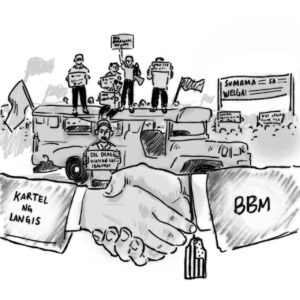
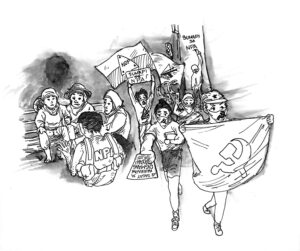
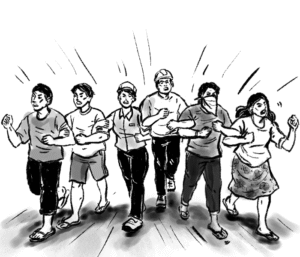
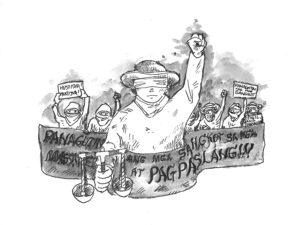
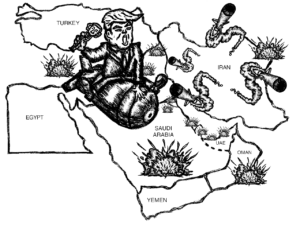
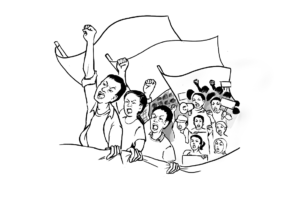
Thousands of women in the country and abroad militantly marked the International Working Women’s Day on March 8. Carrying calls to scrap the 12% value added tax (VAT), to hold accountable all those involved in corruption, and stop the imperialist war in the Middle East, Gabriela and other progressive groups held a program in Liwasang Bonifacio in Manila.
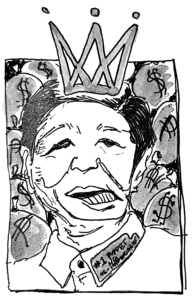
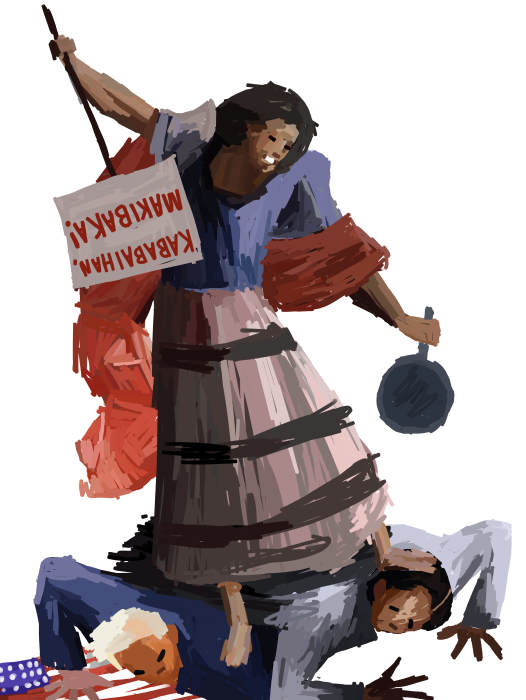
The women then marched from Liwasan to the US embassy to condemn imperialist aggression and plunder that severely worsen the hardships of millions of women worldwide. Police blocked them upon reaching Kalaw Avenue and physically assaulted some of their leaders. There they held their program and burned effigies of Trump, Netanyahu, and Marcos Jr.
Scrap the 12% VAT and excise tax
According to Gabriela, removing the VAT and excise tax on oil, food, and essential services would significantly reduce people’s difficulties. Removing VAT from basic goods like LPG would slash their prices by ₱4.86 per kilo; electricity (Meralco, for the month of March after the rate hike was implemented) would be reduced by ₱300 from the ₱2,800 monthly bill for a 200 kilowatt-hours of consumption, and cause a reduction of around ₱120 from ₱1,000 worth of canned goods, noodles, milk, or other processed food and household items. This may fall even further if removing excise tax on petroleum products and on sugary food and drinks.
In addition, Filipinos are gravely insulted that they pay VAT on every can of sardines, pack of noodles, or liter of cooking oil, only to fund billions of pesos in debt payments, fascism by the military and police, and failed and ghost infrastructure projects, and bureaucrat-capitalists’ kickbacks and plunder.
The VAT is a tax imposed on the value added at each stage in the processing of a product or service and their distribution. It can also be considered a tax for consumption. For example, a can of sardines is charged VAT at every stage of production—from processing up to canning. This system facilitates the state’s tax collection because all the accumulated taxes are collected from consumers.
Although agricultural products such as rice, fruits, vegetables, and fish are not directly taxed, VAT is still collected from production costs. Farmers and fisherfolk use pesticides, fertilizer, feeds, fishing lines, and fuel, all of which are charged with VAT. It also makes up a large portion of harvests and catch transporting cost.
An Ibon Foundation research finds that consumption taxes is the government’s biggest source of revenue (34.4% in 2024). In contrast, only 21.2% of taxes are collected from big companies and wealthy individuals.
Mothers’ ordeal
Prices of goods and services that rise almost all at once make millions of women struggle with how to stretch wages and income.
Such is the burden carried by Belinda, a vendor and traditional masseuse. Her highest possible income is ₱2,000 per week. She stretches this to cover expenses of her family and ailing parents. Additionally, she gives money to her already married son who still needs livelihood support. High prices forced her to cut down on food consumption. She uses solar power and draws water from a well. She has shelved her dream of visiting her ailing parents because of the over ₱1,000 boat fare hike this month.
“I can’t save anything no matter how hard I work. It’s difficult… the government must act to bring down the prices of goods and lower oil prices,” Belinda said.
Although relatively better off, Jessa, a mother of three, also worries about the soaring prices of goods. Her engineer husband’s salary can still currently pay for their daily needs and education expenses.
“Even having a job, we will still soon feel the pain of having everything around us become too expensive for us… this necessitates removing the excise tax and VAT to solve the crisis! These are no longer humane,” Jessa urged.