Iran's firm resistance to US-Israel war of aggression
The Iranian government and people remain steadfast in defending their sovereignty three weeks after US-Israel invaded the country. It stands firm despite the relentless US-Israel bombing that inflicted widespread damage on their communities, military, and economy.
As of March 13, over 1,400 were killed in the war of aggression and over 18,000 wounded, nearly all civilians, as reported by the Iranian Health Ministry. Bombings on residential areas displaced millions from their communities.
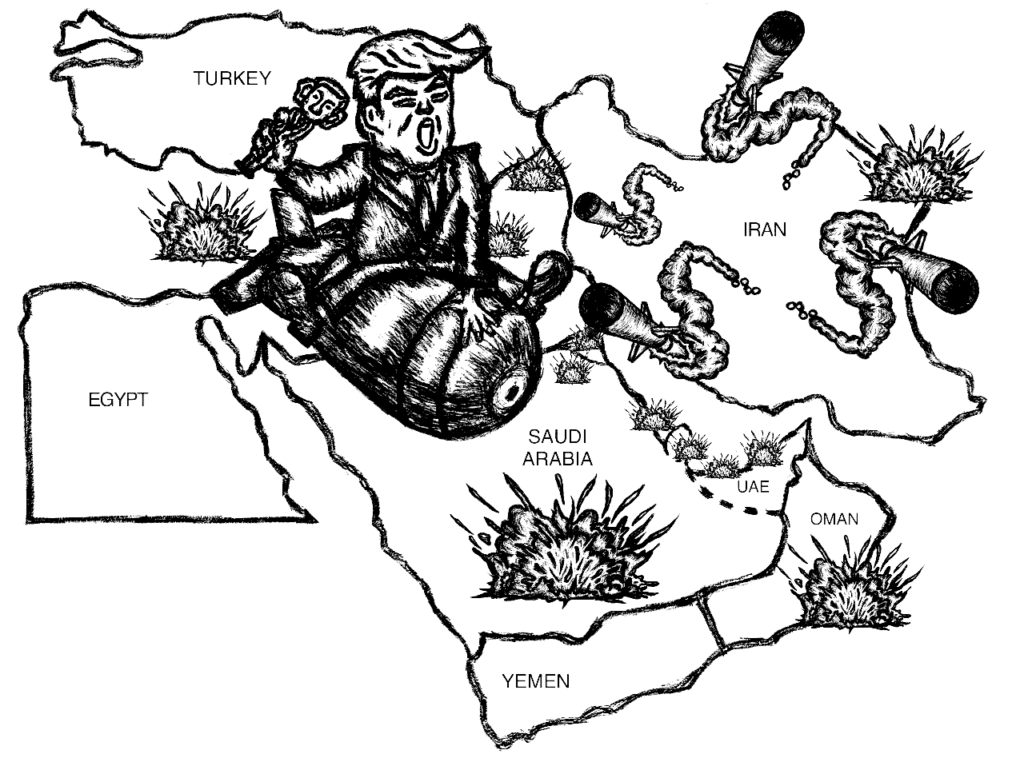
Iran swiftly replaced officials who were assassinated by US and Israel. It launched defense and counterattacks against the more powerful American forces. It unleashed thousands of drones and missiles targeting Israel’s facilities and 27 US military bases in Bahrain, Kuwait, Qatar, Jordan, UAE, Saudi Arabia, and four other nations.
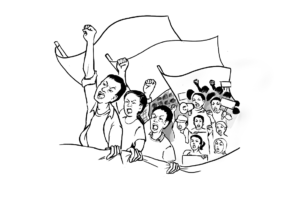
The US further enraged the Iranian people. Millions joined successive rallies within the country from February 28 to condemn the aggression. They again flooded Tehran’s streets on March 18 to bury Supreme National Security Council secretary Dr. Ali Larijani, and other officials killed in bombings claimed by Israel.
Iran seized control of the Strait of Hormuz, the narrow shipping passage between it and Oman, and barred passage to American, Israeli, and allied ships. This passage allows the flow of 20% of global oil supply, 20% of liquefied natural gas, and 30% of global chemical supply, including those used in fertilizers. Iran planted sea mines or explosives in its territorial waters as a defensive measure to block US warships’ entry. It now allows passage only for “non-hostile” ships that abide by its maritime rules.
Epic Mistake
The US Operation Epic Fury, which Iran branded as Operation Epic Mistake, undeniably remains unfinished and far from easy to end, contrary to US President Donald Trump’s wish and declarations. Iran refused a ceasefire until the US halts bombing its country.
Neighboring countries’ economies that rely on oil exports are now severely affected. Unable to sell, some countries cut back or even temporarily halted oil extraction. Millions were stranded or unable to leave the region because countries closed air travel.
The aggression caused extreme suffering worldwide. It choked oil flows and spiked crude oil prices beyond $100/barrel. People already strain at the soaring prices of petroleum products and the resulting rises in goods and services prices, including American people.
The region was shaken even more after March 13 when the US bombed Kharg Island, Iran’s main oil terminal where 90% of its exported oil flows. The US and Israel aim to seize that island, including all oil flowing through it. The island has twice the strategic value for the US because Iran’s exported oil to its main buyer China passes through it.
The US and its allies released 400 million barrels of oil reserves to cover lost production and ease prices. Trump also temporarily lifted the embargo on Russian oil. Global market prices nevertheless show no significant drop. Even Trump’s allies in Europe and Asia refused to send warships to the Middle East to force the opening of Hormuz.
Within the US, Trump faces fierce opposition from the American people. Thousands protested to condemn the invasion that is both illegal and violates international law. They denounced the massive military spending to sustain the aggression. The US squandered an estimated $11.3 billion and nearly $1 billion daily in just the first six days of the invasion. They demand immediately halting the war, a return to negotiations, and ceasefire.