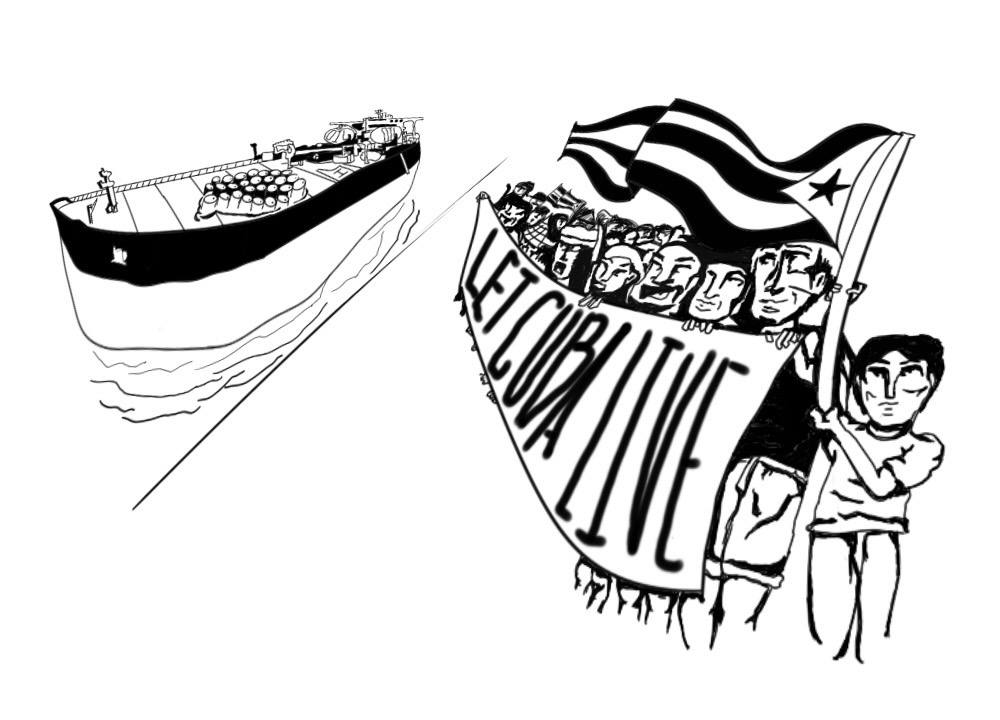
Internationalism and the Cuban people's firm resistance
The Cuban people face unprecedented suffering from the oil embargo imposed on the country by the US Trump regime to “take over” and force its government to submit to its demands. This severely disrupted transportation and the functioning of hospitals and medical facilities, schools, tourism, and the country’s food production. This is only the latest in the unrelenting pressure of a 66-year history of harsh economic sanctions that the US has imposed since the Cuban revolution’s 1959 triumph against the USBatista dictatorship.
Instead of bowing down, the Cuban government closed the huge energy deficit by boosting domestic production of crude oil and rapidly building solar and geothermal facilities. The state prioritized hospitals and health facilities, food production, and basic services for the most vulnerable in society, such as the elderly, children, and pregnant women.
More than this, the Cuban people demonstrated their militant and antiimperialist unity. They condemned the embargo, calling it an “asymmetrical, brutal, and oppressive aggression” by imperialist America. They said the attack has such brutality because the US knows that the Cuban revolutionary government will not collapse, that its social system is firm, and that it remains loyal to social justice and solidarity.
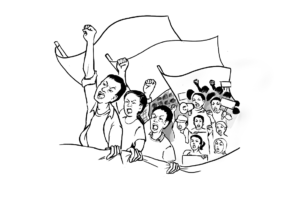
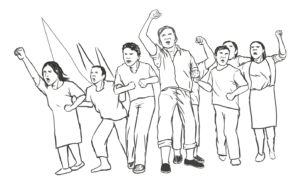
Cubans carried out successive patriotic actions defending their sovereignty. They conduct night gatherings to denounce the US, carrying thousands of candles. The latest massive action in the country was held on April 2, when thousands of Cubans marched to the US embassy in Havana, riding their bicycles and electric bicycles and carrying their national flags. Their president Miguel DiazCanel joined them in this action.
Unwavering support
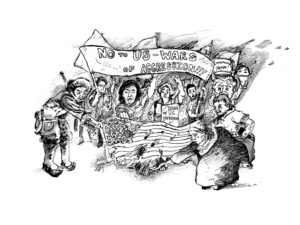
Political and material support poured into Cuba from January to March. Progressive groups, unions, students, and Latin America support groups in Belgium, the UK, Canada, Spain, Malaysia, and cities in the US staged protests and activities in support of Cuba and in condemnation of US imperialism. They are calling for the lifting of economic sanctions.
Progressive groups in Africa visited 31 Cuban embassies to deliver their solidarity with the Cuban people.
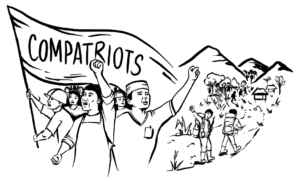
Over 600 activists from 38 countries and 140 organizations arrived in Cuba from March 18 to 20 bringing around 20 tons of aid and political support. They brought food, medicines, medical equipment, batteries, solar panels, and bicycles and other aid.
These groups declared March 21 as the “International Day of Solidarity with Cuba,” marked by worldwide coordinated actions.
Three ships from different countries in Latin America also arrived in Cuba on March 24 carrying aid. Mexico had earlier sent more than 1,200 tons of food and other supplies. Mexico’s president Claudia Sheinbaum pledged to send oil to the country again. Mexico is a major oil supplier of Cuba that stopped delivering oil under US pressure.
A Russian oil tanker arrived in Cuba on March 30 carrying 730,000 barrels of oil. Another tanker carrying more than 27,000 tons of gas is also set to reach the country. Russia has pledged to continue sending aid to Cuba defying the US blockade. Other countries in the Caribbean, China, Canada, Brazil, Italy, and several US organizations have also sent aid.
While these aid shipments are insufficient to fully relieve the Cuban people’s suffering, they carry international support for their sovereignty and a strong denunciation of the US Trump regime’s cruel and criminal massive punishment against the Cuban people.